Literature

Surata Bak Bal Gibi File

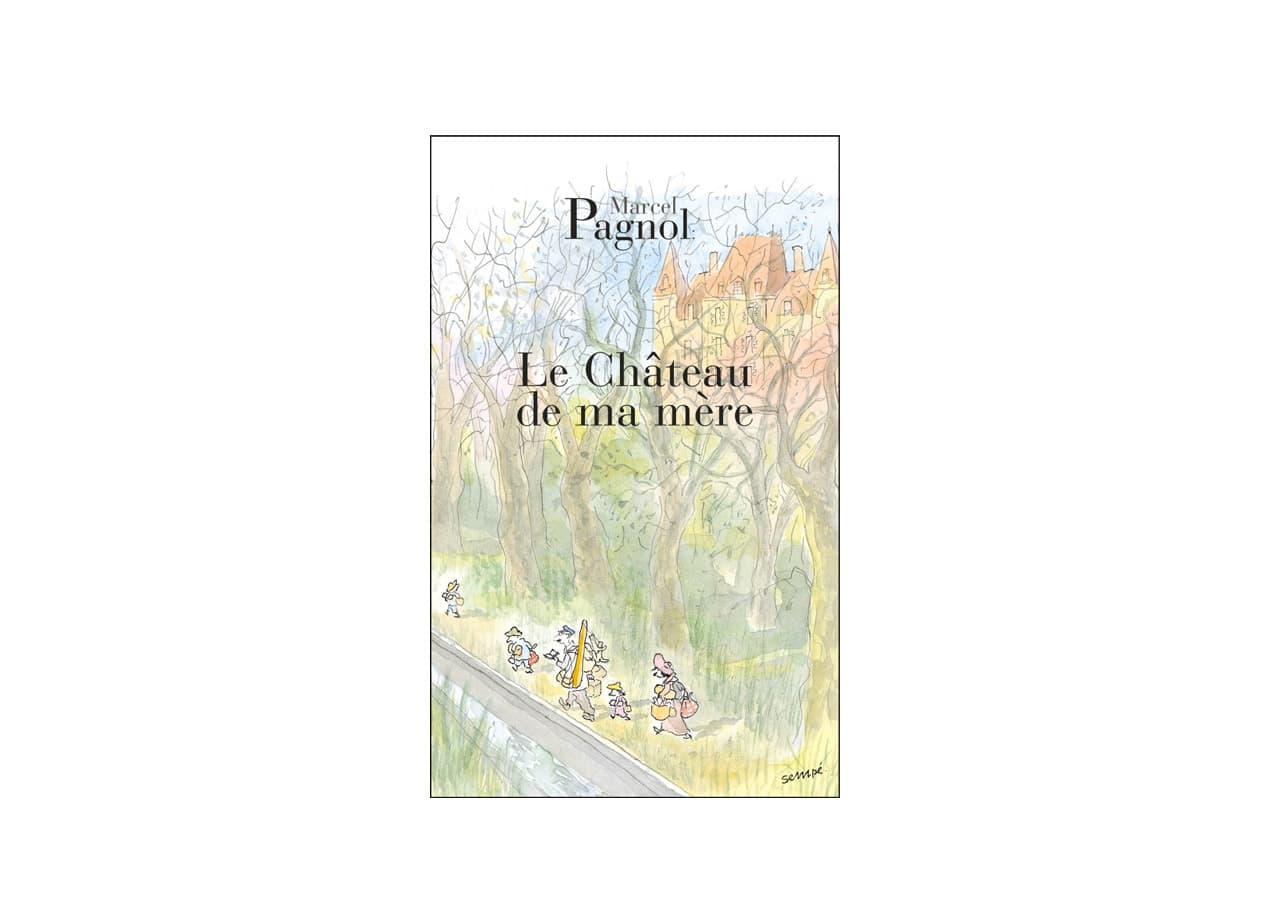
The most beautiful book on child friendship: one morning while hunting in the hills, Marcel meets the little peasant, Lili des Bellons. His vacations and his whole life will be illuminated by it.

The most beautiful book about childhood friendship.

Summary

One year after La Gloire de mon père (My Father’s Glory), Marcel Pagnol thought he would conclude his childhood memories with this Château de ma mère (1958), the second part of what he considered as a diptych, ending with the famous scene of the ferocious guardian frightening the timid Augustine. Little Marcel, after the family tenderness, discovered friendship with the wonderful Lili, undoubtedly the most endearing of his characters. The book closes with a melancholic epilogue, a poignant elegy to the time that has passed. In it, Pagnol strikes a chord of gravity to which he has rarely accustomed his readers.

Hey friend! “
I saw a boy about my age looking at me sternly. You shouldn’t touch other people’s traps,” he said. “A trap is sacred!
” 

– “I wasn’t going to take it,” I said. “I wanted to see the bird.” 

He approached: “it was a small peasant. He was, brown, with a fine Provencal face, black eyes and long girlish lashes.”

Buy online

You will also like:

Surata Bak Bal Gibi File

The phrase "Surata Bak Bal Gibi" (Look at that face, it's just like honey) is a popular Turkish expression used to describe someone or something incredibly sweet, cute, and utterly endearing. It is most frequently used by parents toward their babies or by pet owners toward their beloved animals to express pure, unfiltered affection.

In conclusion, "Surata Bak Bal Gibi" is much more than a casual remark about a cute face. It is a linguistic testament to the power of love and the human capacity to find joy in simplicity. It reminds us that sweetness still exists in the world, waiting to be noticed in the small, quiet, and profoundly innocent faces around us.

The Sweetness of Innocence: An Analysis of "Surata Bak Bal Gibi" Surata Bak Bal Gibi

Language serves as the ultimate mirror for human emotion. When words fail to capture the sheer magnitude of what we feel, we often turn to sensory metaphors to bridge the gap. In the Turkish language, few expressions capture the essence of pure, unadulterated affection quite like the phrase, "Surata Bak Bal Gibi". Translated literally as "Look at that face, it is just like honey," this expression transcends its basic vocabulary to become a celebration of innocence, love, and the magnetic pull of cuteness.

The essay below explores the cultural depth of this phrase, analyzing how it reflects human connection, innocence, and the ways we use language to capture pure joy. The phrase "Surata Bak Bal Gibi" (Look at

This phrase finds its primary home in the interactions between caregivers and the dependent beings they love. It is the spontaneous exclamation of a mother looking at her sleeping baby, or a pet owner admiring the curious eyes of a kitten. In these moments, "Surata Bak Bal Gibi" acts as a verbal release of positive emotional overwhelm. Psychologists often refer to this phenomenon as "dimorphous expression" or "cute aggression"—the urge to squeeze, bite, or intensely dote on something incredibly cute. The Turkish phrase perfectly packages this urge, often followed by playful threats to "eat them up" ( yesin onu annesi ).

Surata bak bal gibi 😍😍 Grup🐾 PatiSeviyoruz 🐾 | PatiSeviyoruz It is a linguistic testament to the power

To understand the weight of the phrase, one must first look at the cultural and biological significance of its central metaphor: honey. Honey is nature’s ultimate sweetener. It is rich, golden, pure, and universally associated with comfort and delight. By projecting the qualities of honey onto a human or animal face, the speaker is declaring that the subject possesses a sweetness that goes beyond visual aesthetics. It suggests a warmth that draws people in and a purity that is untainted by the harshness of the outside world.
The phrase "Surata Bak Bal Gibi" (Look at that face, it's just like honey) is a popular Turkish expression used to describe someone or something incredibly sweet, cute, and utterly endearing. It is most frequently used by parents toward their babies or by pet owners toward their beloved animals to express pure, unfiltered affection.

In conclusion, "Surata Bak Bal Gibi" is much more than a casual remark about a cute face. It is a linguistic testament to the power of love and the human capacity to find joy in simplicity. It reminds us that sweetness still exists in the world, waiting to be noticed in the small, quiet, and profoundly innocent faces around us.

The Sweetness of Innocence: An Analysis of "Surata Bak Bal Gibi"

Language serves as the ultimate mirror for human emotion. When words fail to capture the sheer magnitude of what we feel, we often turn to sensory metaphors to bridge the gap. In the Turkish language, few expressions capture the essence of pure, unadulterated affection quite like the phrase, "Surata Bak Bal Gibi". Translated literally as "Look at that face, it is just like honey," this expression transcends its basic vocabulary to become a celebration of innocence, love, and the magnetic pull of cuteness.

The essay below explores the cultural depth of this phrase, analyzing how it reflects human connection, innocence, and the ways we use language to capture pure joy.

This phrase finds its primary home in the interactions between caregivers and the dependent beings they love. It is the spontaneous exclamation of a mother looking at her sleeping baby, or a pet owner admiring the curious eyes of a kitten. In these moments, "Surata Bak Bal Gibi" acts as a verbal release of positive emotional overwhelm. Psychologists often refer to this phenomenon as "dimorphous expression" or "cute aggression"—the urge to squeeze, bite, or intensely dote on something incredibly cute. The Turkish phrase perfectly packages this urge, often followed by playful threats to "eat them up" ( yesin onu annesi ).

Surata bak bal gibi 😍😍 Grup🐾 PatiSeviyoruz 🐾 | PatiSeviyoruz

To understand the weight of the phrase, one must first look at the cultural and biological significance of its central metaphor: honey. Honey is nature’s ultimate sweetener. It is rich, golden, pure, and universally associated with comfort and delight. By projecting the qualities of honey onto a human or animal face, the speaker is declaring that the subject possesses a sweetness that goes beyond visual aesthetics. It suggests a warmth that draws people in and a purity that is untainted by the harshness of the outside world.